

Natures Variety

Common Questions

LEARN MORE ABOUT CHOOSING A FOOD
Proper Nutrition   |   Healthy Ingredients   |   Storage and Shelf Life   |   Choosing a Food   |   Safety and Quality   |   How to Buy
Click a question below to read the answer. Or, expand all questions and answers on this page.

Which Nature's Variety formula should I feed?

Nature's Variety offers many nutritious choices for your dog or cat, including our Raw Frozen Diets, grain-free Instinct kibble and cans, and our wholesome Prairie kibble and cans. Any or all of these nutritious diets may be right for your special pet, but a few initial considerations may be helpful...

Are you trying to address any food allergies?
If grains are an issue for your pet, you may want to consider our Raw Frozen and Instinct diets, which are high in animal-sourced protein and are naturally grain-free. Grain-free diets often prove helpful in improving skin and coat issues as well.

Does your pet enjoy a particular protein?
Nature's Variety offers a wide array of choices for your pet to enjoy, including chicken, lamb, duck, beef, rabbit, salmon, and venison. Variety – also known as rotation – not only helps your pet enjoy their food, but also can help prevent overexposure to ingredients and be helpful in preventing allergies.

Are you looking for a wholesome, well-rounded diet that promotes easy and appetizing variety?
If so, you could consider our Prairie foods. Prairie is rich in meat, poultry and fish with whole grains, fruits, and vegetables – and we offer a complete line of kibble and can formulas for your pet to enjoy.

Whichever Nature's Variety food you choose for your pet, you can feel confident they are getting the best nutrition nature has to offer. We encourage you to work closely with your veterinarian to determine which foods may be right for your special animal companion.

How do I transition my pet to a new food?

It is always a good idea to start out slowly on a new diet with any pet. Slowly increase the amount of new food being added to the present diet over a period of 3-4 weeks. If any digestive upset or loose stool occurs, make the transition more gradual. It is a good idea to allow your pet's digestive system to calm down and return to normal before proceeding. There is no need to rush this transition.

(Once your pet is accustomed to Nature's Variety foods, you can rotate freely between forms and flavors.  All Nature's Variety diets are specially formulated for rotation feeding – learn more about the Nature's Variety Rotation Diet.)

How often should I feed my dog/cat?

We recommend feeding your pet twice daily. Studies have shown that feeding more than once a day may help to prevent bloat and behavior issues. We suggest talking with your veterinarian to determine the best feeding schedule for your animal companion.

Is your food recommended by veterinarians?

Yes, many veterinarians recognize the critical importance of superior nutrition and recommend our foods for the pets in their practice. Although dogs and cats have eaten raw foods in the wild for thousands of years, commercially available raw food for pets is relatively new. As a result, your veterinarian may not yet be aware of the benefits associated with raw diets. Many vets first learn about raw when one of their patients experiences positive results from the diets, such as relief from allergies, healthy skin, and improved vitality. Make sure to talk with your veterinarian about the proper nutrition for your pet, and also do your own research to better understand the nutritional needs of your pet and the options that exist in pet foods today.

How do you develop feeding recommendations for your foods?

Our diets are based on AAFCO recommendations, which are based on the National Research Council's Nutrient Requirements of Dogs and Cats. This is a compilation of all the scientific research that has been done on dog and cat nutrition and is the reference book used by veterinarians.

What should I feed if my dog/cat has allergies?

It is important to work closely with your veterinarian to determine if your pet's reaction is food-related or not. If it is food-related, it can be a true allergy (immune response) or simply intolerance. Either case requires careful identification of the irritant and special attention to ingredient quality and pet food labels.

Common food irritants can include chicken, beef, eggs, wheat, and corn. Typically, irritants are proteins (animal or plant), and not fats. As a result, if your pet is allergic to chicken protein, it will likely not be allergic to chicken fat. Products that are chicken-free (no chicken, chicken organs, or chicken eggs) but include chicken fat should be safe to feed.

Allergies or intolerances may develop from repeated exposure – in other words, by not varying or rotating protein species. We recommend rotating not only flavors, but also styles of food (raw, kibble, can) to help prevent allergies, intolerances, and picky eaters.  Learn more about the Nature's Variety Rotation Diet.

What should I feed if my dog/cat has allergies to grain?

Nature's Variety offers a wholesome variety of grain-free foods for your pet. Our Raw Frozen Diets and our Instinct kibble and canned foods are all grain-free and could provide relief from the symptoms associated with grain allergies. Duck, Rabbit, and Chicken are just some of the foods your pet could enjoy with our grain-free diets.

What should I feed if my dog has allergies to chicken?

We would recommend our Prairie Lamb Meal & Oatmeal Medley and grain-free Instinct Rabbit Meal Formula.

If my dog/cat is allergic to chicken protein, why can he/she eat a product that contains chicken fat?

Typically, irritants are proteins (animal or plant), and not fats. As a result, if your pet is allergic to chicken protein, it will not be allergic to chicken fat. Products that are chicken-free (no chicken, chicken organs, or chicken eggs) but include chicken fat should be safe to feed. Please consult your veterinarian if you have any questions.

My pet is always itching – could this be allergies? What food do you recommend?

Itching, foot biting, nose or eye discharge, and hot spots, are common signs of allergies. However, allergies can be environmental or food related. It is important that you work closely with your veterinarian to determine if your pet's reaction is food-related or not. If it is food-related, it can be a true allergy (immune response) or simply intolerance. Either case requires careful identification of the irritant and special attention to ingredient quality and pet food labels.

Common food irritants can include chicken, beef, eggs, wheat, and corn. Typically, irritants are proteins (animal or plant), and not fats. As a result, if your pet is allergic to chicken protein, it will not be allergic to chicken fat. Products that are chicken-free (no chicken, chicken organs, or chicken eggs) but include chicken fat should be safe to feed.

Allergies or intolerances may develop from repeated exposure – in other words, by not varying or rotating protein species. We recommend rotating not only flavors, but also styles of food (raw, kibble, can) to help prevent allergies, intolerances, and picky eaters.  Learn more about the Nature's Variety Rotation Diet.

Is your food hypo-allergenic?

In a broad sense, our foods are not 'hypo-allergenic' since we do not hydrolyze our proteins. (All known allergens are proteins above a certain molecular weight or size. The combination of protein size and protein type is what the body recognizes as an allergen. Hydrolyzing is when the food proteins are artificially broken down into smaller sized fragments that are below a specific molecular weight. Thus, these small fragments are no longer recognized by the body as an allergen.) In a more specific sense, our foods may be 'hypo-allergenic' for your pet. If your pet is allergic to grains or chicken, we have complete and balanced diets without these ingredients, thus they would be 'hypo-allergenic' choices for you.

What should I feed if my pet has a special health condition?

We encourage you to work out a solution with your veterinarian, by identifying the problem and carefully determining what to feed.

What food would you recommend for my cat/dog that has bladder stones?

The number one thing that you can do for your pet is to keep him or her fully hydrated. Many urinary or bladder problems arise from concentrated urine as opposed to diet. Water flushes the system and keeps everything moving. Water also prevents urine from becoming concentrated, which allows crystals to form. Our Raw Frozen Diets and our Instinct and Prairie canned diets are high in beneficial moisture. Talk with your veterinarian to ensure a proper and complete diagnosis of the type of stone your pet has - the chemical composition of the stone is what determines treatment and diet choices, not the mere presence of a stone.

I want my pet to shed less… what food do you recommend?

Many pet owners have found that a highly digestible, grain-free diet helps reduce shedding. Nature's Variety Raw Frozen Diets and our Instinct kibble and canned formulas provide superior nutrition without grains and may help address skin and coat issues.

I want my pet to have smaller – or less – stool… what food do you recommend?

Many pet owners have found that a highly digestible, grain-free diet reduces stool volume for their dogs and cats. Nature's Variety Raw Frozen Diets and our Instinct kibble and canned formulas provide superior nutrition without fillers and may decrease backyard and litter box cleanup.

My pet frequently has digestive upset. Which foods are the most gentle for sensitive stomachs?

All natural, high quality ingredients should be the first consideration. Dogs and cats have a difficult time digesting cereal grains, soy products, and low quality animal proteins. Commercially prepared, complete and balanced raw diets are the most digestible, but be sure to transition slowly to any new food. In the meantime, canned foods, like our grain-free Instinct cans, are higher in digestibility than kibble. Aside from digestibility, look for foods like lamb, chicken, or salmon mixed with brown rice or oatmeal. If you suspect food intolerances, select salmon or lamb as these tend not to be allergens. We always recommend working closely with your trusted veterinarian to develop a solution for your pet's stomach issues.

My pet is a picky eater! Which foods are the most popular tastes?

Pets are finicky about different things – for some it is the flavor, for others it may be texture or odor. Experimenting with your pet's diet may help to identify their likes and dislikes. Try to find an animal protein your dog or cat enjoys. We often hear from our customers that our Instinct Rabbit and Duck canned formulas are particularly palatable, as is our Prairie Chicken kibble and chicken raw diets.

We understand that pets have likes and dislikes when it comes to what they eat every day – we offer free kibble samples at your local retailer as well as A Taste of Raw, a small portion of our raw diets nicely priced at $4.99. Our foods always come with a 100% satisfaction guarantee, so you can feel confident trying our foods for your special dog or cat. Remember to always transition slowly when changing your pet's diet.

My pet has a special condition – how can I find out what has worked for other pets with the same condition?

Every day we hear amazing stories from our customers about the results their pets have enjoyed on our natural and nourishing diets. You may find pets with similar situations in our Family Scrapbook – we encourage you to see what worked for them.

Do you have a puppy/kitten formula? Why not?

Every Nature's Variety diet is complete and balanced for all life stages, from energetic puppies and kittens to adult and senior dogs and cats. Our nutritious foods are rich in meat, poultry, and fish to nourish muscles and build strong bones. Beneficial fruits and vegetables are included to provide important vitamins, minerals, and antioxidants. Our wholesome foods will properly nourish your dog no matter what his age - so there's no need for life stage diets, like puppy or kitten formulas.

How much do I feed my puppy/kitten?

Puppies and kittens are very active and spend a lot of energy playing, exploring, and growing - and they need to be fed appropriately. Each of our wholesome diets has feeding guidelines for puppies and kittens; you may also visit our Feeding Guide for more information. Each puppy and kitten is different, so it is important to work with your veterinarian to insure your new little family member gets just the right nutrition.

How should I feed my large breed puppy?

The needs of a large breed puppy are no different from a small breed puppy. All puppies need high quality protein, low carbohydrate, balanced calcium to phosphorus (CA:P), bioavailable vitamins and minerals, and beneficial omega fatty acids like DHA (found in fish and fish oil). What does vary with large breeds is the growth rate and how the growth is managed through diet and lifestyle. We recommend working closely with your veterinarian to develop a healthy plan for your large breed puppy's feeding and exercise regimen. We also recommend varying the flavor and format of food fed to puppies – it will help to prevent boredom and possibly prevent food intolerances from developing.

How much do I feed my pregnant/lactating dog or cat?

When dogs and cats are pregnant they need to consume much more food than they traditionally would eat. Each dog and cat is different, so it is important to work with your veterinarian to insure your pet does not become too heavy or too thin. As a general rule, pregnant dogs and cats eat approximately 50% more food than when not pregnant. Please work with your veterinarian to develop the proper feeding regimen for your pregnant/lactating pet. Also, visit the Feeding Guide for helpful feeding information.

Do you have a senior formula? Why not?

Every Nature's Variety diet is complete and balanced for all life stages, from energetic puppies and kittens to adult and senior dogs and cats. Our nutritious foods are rich in meat, poultry, and fish to nourish muscles and build strong bones. Beneficial fruits and vegetables are included to provide important vitamins, minerals, and antioxidants. Our wholesome foods will properly nourish your dog no matter what his age, so there's no need for a life stage – or senior – diet.

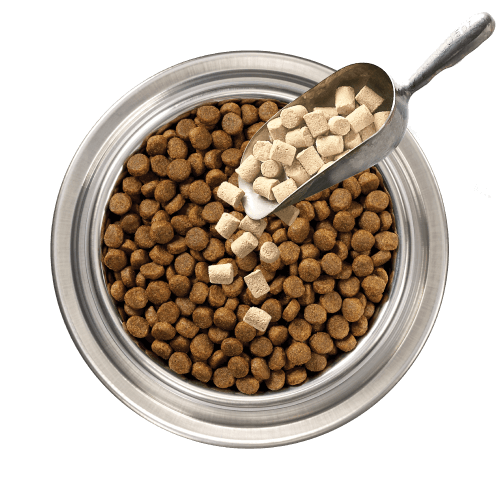
Can I feed both raw and kibble during the same mealtime?

Yes. Even though raw leaves the stomach and is digested more quickly than kibble, it is no different from adding canned food to kibble. In fact, the added moisture from the raw helps to speed the gastric emptying (the stomach will empty when the contents have been liquefied).

What is the digestibility of your foods and how do you determine it?

Our Prairie and Instinct kibble diets are made from high quality meat, poultry, and fish meals. Digestibility of these kibble diets range from 85-90%. Our canned formulas are closer to 90% digestible. Our Raw Frozen Diets have been tested and shown to be 92% digestible. Digestibility is calculated by using the amount of calories and nutrients consumed vs. the amount of calories and nutrients excreted in feces.

Do raw and kibble digest differently?

Yes. Typically, kibble digestibility can range from 60%-90% depending on ingredient choice and quality. Likewise, because kibble is cooked, the proteins are denatured and not in their native conformation. Generally, one can say that corn and wheat based diets or those with by-product meals have a lower biological value and are less digestible. This is rather intuitive when we consider that dogs and cats are physiologically designed to digest animal-based protein and not plant-based protein. Our Prairie and Instinct kibble diets are made with high quality meat, poultry, and fish meals. Digestibility of these kibble diets ranges from 85-90%. Our Nature's Variety Raw Frozen Diets have been tested and shown to be 92% digestible. Because the meat is raw, it has a higher biological value, proteins are in the native state, and the body is better equipped to extract all the essential nutrients from the food.

How much does it cost to feed raw?

The cost to feed raw depends upon the needs of your special dog or cat. Each pet is different, and their nutritional requirements will vary depending upon their age, size, and activity level. For estimating purposes only, a 50 lb dog with moderate activity will eat approximately $2.40 a day if fed 100% raw (assuming they eat 1.25 patties, Chicken Formula, at average retail cost). We recommend rotating among Nature's Variety foods, feeding dogs and cats different formats (kibble, can, raw) and different varieties (venison, chicken, lamb, salmon). Your pet will enjoy and benefit from the variety, and you can choose the nutritious foods that best fit your budget and lifestyle.

Can I give my pet a raw bone as a meal?

Although raw bones are an excellent source of minerals, essential fatty acids, proteins, and enzymes, they are intended as a beneficial treat and do not provide complete and balanced nutrition for a pet.

Do I need to add supplements to your food?

No, our diets are complete and balanced for all life stages and all breeds. We would not recommend supplements unless it is specifically recommended by your veterinarian.